

Conservative estimates value the snack food industry as being worth at least several hundred billions dollars with a good chunk of that cash being invested directly into R&D. As you might expect companies are very keen is prevent the competition knowing exactly what they’re up to. Which is how you ended up with a company in the 1980’s delivering a chocolate bar to stores nobody knew existed until they started stacking it on shelves.
That company was Cadbury, a chocolate conglomerate that was, at one time, known for making fairly decent quality chocolate but is now better known for making greasy, palm-oil infused slabs of shit pretending to be chocolate. Yeah, for anyone who doesn’t know, that’s why most chocolate tastes like the melted down boot hell of someone who just moonwalked across a bakery floor now.

Anyway, in its native Britain Cadbury has long been at war with several other confectionary companies, though their main rival was Rowntree’s. While they aren’t really as committed to the chocolate game as much these days, in the 1980’s Rowntree’s were stunting just all over Cadbury with their inventive and unique snacks. With the biggest chocolate-flavoured thorn in Cadbury’s side being the Aero.
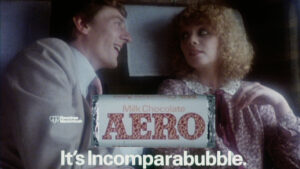
In particular Cadbury were all kinds of pissed that they couldn’t quite figure out how to emulate the bubbly texture of the Aero meaning there was an entire corner of the market Rowntree’s had a total and complete monopoly on. Which obviously wasn’t ideal for a company with the ultimate goal to make us all circular, so they invested millions into figuring out how the fuck Rowntree’s did it.
Now we’d love to tell you how to put bubbles into a chocolate bar but we honestly don’t know. In fact, almost nobody does with the process of how to do it being something both companies refuse to divulge the specifics of. Hell, Cadbury didn’t even bother to patent it so that they’d never have to write it down. Because writing it down would just give the competition more chance to steal that shit.
What we do know though is that the company spent several months secretly refining the technique as their marketing arm figured out what kind of product to make using it. With them eventually settling on a product similar to an Aero they called the Wispa. The main difference between the two products being that the process to make a Wispa resulted in smaller bubbles than an Aero, making it creamier. Something all of the marketing for the bar was keen to point out.
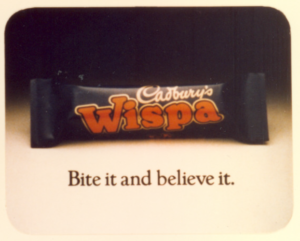
As for the launch, Cadbury were so sure that this product was going to be a hit they absolutely refused to tell anyone about its existence, fearing that Rowntree’s would catch wind and firebomb their factory or something. That’s a joke, but keep in mind millions were at stake. Weirdly, Cadbury did allow one group of people to know about the bar’s existence prior to this, a few towns in the North-East of England that existed in a weird advertising deadzone.
This allowed the company to run limited ads to promote the bar as a trial run and the response was, intense. As in, shopkeepers getting into fistfights at wholesalers to get the last box kind of intense.
Spurred on by this, Cadbury didn’t even both buying any advertising space for the launch in 1981, instead opting to fill trucks with the boxes of the things, handing the keys to salesmen and telling them to just drive up to random supermarkets and ask if they wanted 40,000 chocolate bars.
Despite seeming like the the sort of move that would result in being told, in no uncertain terms, to fuck all the way off, this worked. In fact it worked too well and stores not only happilly agreed to accept orders they’d not placed, but asked the salesmen for more. With demand ultimately and quite literally, outstripping supply forcing Cadbury to stop selling them for a time whilst they built a dedicated Wispa-making factory.